
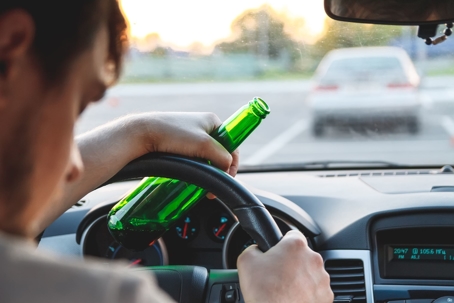
You have just been arrested for DUI in California, and after the shock wears off, one thought tends to push everything else aside: “Is this going to cost me my license and my career?” You worked for years to earn that license, and the idea that one night, one mistake, could take it all away is overwhelming. The court date and the DMV notice are scary, but the possibility of losing your livelihood often feels worse.
That fear is not imaginary. A DUI can reach far beyond fines, classes, and a license suspension. For many professionals in California, a DUI can trigger board questions about safety, judgment, and substance use, sometimes months or even years after the case seems “over.” The decisions you make in the first weeks of a DUI case often shape how serious those licensing consequences become.
At The Blalock Law Firm, PC, we focus solely on DUI defense in Contra Costa County and the surrounding areas. Attorney Blalock personally handles each DUI case in court and at DMV hearings, including cases for nurses, teachers, real estate agents, and other licensed professionals. In this guide, we share how DUI cases and professional licenses really intersect in California, and what you can do right now to protect both your record and your career.
Why A California DUI Is A Serious Risk For Professional Licenses
Many professionals first assume that a DUI is “only” a traffic or criminal matter. In California, a DUI is a criminal offense under the Vehicle Code, usually filed as a misdemeanor for a first arrest without injuries. It also triggers an administrative action at the DMV that can result in a license suspension, even before the criminal case ends. Both the criminal case and the DMV process can create records that professional boards later review.
Licensing boards and agencies care about more than whether you paid your fines and finished DUI school. They look at what a DUI says about your judgment, your relationship with alcohol or drugs, and your willingness to follow laws and regulations. A conviction, especially when combined with facts like a high blood alcohol level or an accident, can be viewed as a sign of possible impairment risk in the workplace, regardless of your actual job performance.
Boards also consider patterns over time, not just one data point. An isolated DUI with no aggravating factors might lead to questions but no formal discipline in some professions. A second DUI, or a DUI plus prior alcohol related incidents, can cause a board to see a pattern of unsafe behavior or a potential substance use disorder. Because our entire practice at The Blalock Law Firm, PC centers on DUI defense, we regularly see how a single DUI can appear harmless today, then resurface during a renewal, credentialing review, or job change years later.
Common Misconceptions About DUIs And Professional Licenses
Right after an arrest, professionals often cling to a few assumptions that feel comforting but can be risky. One common belief is that a first-time misdemeanor DUI “stays in criminal court” and that boards will never know unless someone tells them. In reality, convictions are public records. Many boards run periodic background checks, and employers, hospitals, and credentialing bodies in California routinely search court databases when hiring or renewing contracts.
Another misconception is that if you avoid jail and receive probation, your license is automatically safe. Avoiding custody is important, but many boards care less about the length of your sentence and more about what the conviction and underlying facts suggest. A short probation with a high blood alcohol level and an accident, for example, may concern a board more than a longer probation on a reduced, less serious charge with no aggravating factors.
A third assumption is that if you do not self-report, the board will not find out. You are not alone in thinking this way. The problem is that disclosure is only one path by which boards learn about DUIs. Employers in sensitive fields may have their own reporting obligations. Some boards receive notifications when certain types of convictions are entered. Even if no one reports anything today, a future renewal or job application that requires a background check can bring an old DUI straight into a board’s file.
We see many licensed clients in and around Contra Costa County who were surprised to get questions from their board years after their DUI case ended, often right when they were applying for a new job or renewing. They assumed that because they finished probation and kept working, the board would never ask. Our goal is to help you avoid that surprise by understanding now how your choices in the DUI case can shape what the record looks like later.
How California Licensing Boards Typically View A DUI
No two licensing boards are identical, and each profession has its own regulations and culture. That said, most California boards share a few core concerns when they review a DUI. First, they look at public safety. For health care providers, for example, a board will ask whether alcohol use could impair safe patient care. For teachers, the focus is often on student safety and role modeling. For real estate agents and contractors, the concern may be client trust and judgment.
Second, boards look at what a DUI says about your judgment and willingness to follow the law. Even if the incident occurred off duty and harmed no one, it still reflects a decision to drive after drinking. Some boards view this as “unprofessional conduct,” especially if there are aggravating factors. Others may treat certain DUIs as involving “moral turpitude,” a legal concept that can justify discipline in serious cases. The specific labels vary, but the underlying idea is the same. Boards exist to protect the public, and they interpret your conduct through that lens.
Third, boards consider your honesty and transparency. Many applications and renewal forms ask about criminal convictions, and sometimes about pending charges or investigations. If a professional lies or omits a DUI on a form, the misrepresentation itself can become a separate ground for discipline, sometimes more serious than the DUI. In our DUI defense work, we have seen boards discipline professionals primarily for inaccurate disclosures rather than the original offense.
Different professions face different levels of scrutiny. A nurse or physician applying for privileges at a Bay Area hospital may face more probing questions about a recent DUI than a real estate agent renewing a license with no prior issues. Teachers may deal with both the Commission on Teacher Credentialing and a local school district. Commercial drivers are held to stricter blood alcohol limits and may face immediate employment consequences. Because we concentrate on DUI cases, we account for these differences when advising clients from various professions about how their specific board is likely to view a given fact pattern.
Key DUI Factors That Increase Professional License Risk
Not every DUI presents the same level of licensing danger. Boards typically look at the details of the incident, not just the final conviction label. Some case facts consistently raise more concern than others. Understanding these factors can help you and your attorney prioritize what to fight, what to negotiate, and what to document in your favor.
Several common aggravating factors tend to increase risk. A high blood alcohol level suggests heavier impairment and may cause a board to worry about loss of control or dependency. An accident, especially one involving injury or significant property damage, is an obvious red flag for public safety. Having a minor in the car, reckless speeds, or refusing a chemical test often makes a file stand out, even if the court imposed standard penalties.
Boards also pay attention to patterns. A second or third DUI usually draws much more scrutiny than a first offense, particularly in professions tied to safety or public trust. Even non-DUI incidents, such as alcohol related disturbances or prior alcohol counseling, can contribute to a picture of ongoing risk if they appear in the record. From a licensing perspective, it often matters whether the DUI looks like a single, out-of-character lapse or part of a continuing issue.
Because we conduct thorough case evaluations at The Blalock Law Firm, PC, we look closely at each of these factors when we first review police reports, test results, and client history. Our goal is to understand which details are most likely to alarm a board later and to plan a defense that addresses those pressure points. In some cases, that might mean challenging a reported high blood alcohol level. In others, it might mean building a strong record of prompt treatment and compliance to counter a pattern of concern.
Why The Outcome Of Your DUI Case Matters To Your License
From a licensing perspective, the outcome of your DUI case is not just about guilt or innocence. It is also about how the final record will look when a board, employer, or credentialing committee reviews it on paper. That record includes the charge you are convicted of, any enhancements or special allegations, and the conditions of your sentence.
A standard California DUI conviction is more likely to raise concerns than a non alcohol related reckless driving conviction. A “wet reckless,” which is a reckless driving conviction that notes alcohol involvement, generally appears less serious than a full DUI, although boards can still view it as an alcohol related offense. A “dry reckless,” which does not refer to alcohol, may be treated differently again. While no outcome can guarantee what a particular board will do, reducing the charge can lessen how severe the incident appears.
The wording of the plea and sentencing terms also matters. Dismissed counts, dropped enhancements, and standard rather than enhanced penalties all contribute to a more contained record. For a professional license holder, it can be just as important to avoid certain findings or enhancements in the court file as it is to avoid additional days in custody. The more restrained the written record, the easier it may be later to show a board that the incident was limited and fully addressed.
At The Blalock Law Firm, PC, we structure DUI defense with these collateral consequences in mind. We are proud that 99% of our clients avoid additional jail time, and we take the same strategic approach to limiting the long-term impact of the case on employment and licensing. That might mean pushing for a reduction where the facts and law support it, or it might mean negotiating sentencing terms that demonstrate rehabilitation and responsibility to any future reviewer of the file.
Reporting Duties And Background Checks After A DUI
The question of when, whether, and how to report a DUI to a licensing board or employer is one of the most stressful parts of this process. Many California license applications and renewal forms ask specifically about criminal convictions, and some ask about pending charges or investigations. The wording of these questions varies from board to board, and how you answer them can have serious consequences.
As a general rule, there is a difference between an arrest and a conviction. Many forms require disclosure of convictions but not arrests. However, some boards or employers ask about “any charges,” “any plea of guilty or no contest,” or “any pending criminal matter.” Others require you to update the board within a certain number of days after a conviction. Because the exact language matters, it is critical to review your board’s requirements and speak with counsel about your specific situation rather than guessing.
Background checks add another layer. Even if your board does not ask for an update today, standard checks for hospital privileges, school district employment, government contracts, or new positions often pull criminal court data. A DUI conviction that seemed contained years ago can appear on a report when you apply for a promotion or a new job, prompting your board or employer to revisit the incident. In some fields, such as health care and education, these checks are routine and can happen more than once in a career.
One of the most damaging mistakes we see is an inaccurate or incomplete answer on an application or renewal form. A board that might have treated a single DUI as a correctable lapse may view dishonesty on a form as a direct threat to public trust. In our free consultations at The Blalock Law Firm, PC, we talk with clients about the timing of pleas relative to renewal dates and about how a conviction will appear on background checks, so they can plan disclosure strategies with a full picture of the risks.
Steps You Can Take Now To Protect Your License After A DUI
While you cannot erase an arrest, you can take concrete steps right now that help protect your license and strengthen your position if a board ever reviews your case. The first step is to speak promptly with a DUI defense firm that understands how professional licensing works in California. Decisions you make before the first court date, including how you handle the DMV hearing and whether you rush to plead guilty, can have ripple effects for years.
Early, voluntary actions often carry significant weight. Many boards look favorably on professionals who take responsibility and address potential problems before being forced to. That might include obtaining an alcohol assessment, attending counseling, or enrolling in a treatment program, even if the court has not yet ordered it. It can also include attending self-help meetings or educational programs that demonstrate insight and commitment to change.
Strict compliance with all court and DMV conditions is another key step. Missing classes, driving on a suspended license, or violating probation can quickly transform a manageable situation into a pattern of disregard for rules. From a board’s perspective, consistent compliance shows that you respect legal obligations and can follow structured conditions, which is reassuring when they evaluate fitness to practice.
Documentation matters. Keep records of assessments, counseling sessions, attendance at meetings, and letters from counselors or supervisors when appropriate. If a board ever opens an investigation, you will be able to show not only that the DUI was a single event, but also that you responded to it with concrete, sustained efforts. Because we provide personalized service, we discuss these steps with our licensed clients at the outset and help them build a record that can support them if questions arise later.
How A Focused DUI Defense Firm Supports Licensed Professionals
Professionals facing a DUI do not just need any criminal defense attorney. They need counsel who understands how a DUI case in Contra Costa County courts and at the DMV can affect a state license, hospital privileges, school employment, or other credentials. At The Blalock Law Firm, PC, our entire practice is built around DUI cases, and that focus shapes how we protect licensed clients.
We handle both the criminal court case and the DMV hearing, which are often the first official systems that create records a board might later see. From the start, we evaluate the police stop, field sobriety tests, breath or blood testing procedures, and any aggravating factors to identify legal and factual issues. For licensed professionals, we also look ahead to how certain outcomes, enhancements, or sentencing terms could appear in a board file and factor that into our strategy.
Because Attorney Blalock personally handles each case from start to finish, you are not passed between different lawyers who may not fully grasp your licensing concerns. His training in DUI defense from Harvard Law School helps us identify weaknesses in the prosecution’s case and opportunities for charge reductions or favorable resolutions that can limit long-term harm. We are mindful that for a nurse, a teacher, or a real estate agent, the difference between a standard DUI conviction and a carefully negotiated outcome can be the difference between a difficult season and a career-changing board action.
We also understand the financial pressure that comes with a DUI, especially when your ability to work feels uncertain. Our flat rate fee and flexible payment plans make it more realistic for professionals to seek representation early, before critical deadlines or court appearances pass. During a free consultation, we provide a realistic assessment of both the DUI case and the potential licensing issues, so you can make informed decisions rather than guessing what might happen.
Protect Your License And Future After A California DUI
A California DUI is a serious event, especially when your professional license and career are on the line. The good news is that your future is not defined only by the arrest. How your case is defended, how the record is shaped, and how you respond in the weeks and months that follow all influence what a licensing board will ultimately see. With the right strategy, many professionals are able to move past a DUI without losing the work they have built their lives around.
If you hold a professional license and are facing a DUI in or around Contra Costa County, you do not have to navigate these decisions alone. We can review your police reports, discuss how different outcomes may affect your board, and help you plan both your legal defense and your practical next steps. To talk with us about your situation and your license concerns in a free, confidential consultation, contact The Blalock Law Firm, PC online today or call us at (925) 259-3270.