
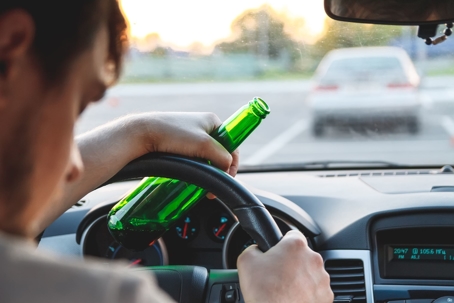
The letter from the DMV shows up, and suddenly, your biggest fear is not the court date, it is losing your license and watching your insurance jump because someone said you now need an SR-22 after a DUI.” You might be looking at that notice, trying to figure out what it means for getting to work, driving your kids, or keeping your job. The paperwork talks about suspensions, proof of financial responsibility, and deadlines that feel like they are already passing you by.
In Contra Costa County, this is a common place to be after a DUI arrest or conviction. People are often more worried about how they will drive than about any other part of the case. They hear bits and pieces from friends or insurance agents about SR-22, but no one really explains how California DMV rules, the court case, and their insurance all fit together. That confusion can lead to expensive mistakes and longer license problems than necessary.
At The Blalock Law Firm, PC, our entire practice is focused on DUI defense in Contra Costa County and nearby communities, and SR-22 issues come up in nearly every case we handle. Attorney Blalock personally appears at both court and DMV hearings, so we see how those decisions translate into real DMV requirements, including SR-22. In this guide, we will walk through what SR-22 really is in California, how a DUI triggers it, how long it usually lasts, and how to manage it without making your situation worse.
What SR-22 Really Means After a California DUI
Most people talk about “SR-22 insurance,” which makes it sound like a special kind of policy. In California, SR-22 is not a separate policy. It is a form your insurance company files with the DMV to prove that you carry at least the minimum liability coverage required by law. The DMV uses that filing as a way to monitor higher-risk drivers for a period of time after certain violations, including DUI.
When you are told you need SR-22 after a DUI, what it really means is that the California DMV will not let you reinstate or keep your driving privileges unless it receives this proof of financial responsibility. Your insurer submits the SR-22 directly to the DMV, typically electronically. Once the DMV has an active SR-22 filing on record, and you meet other reinstatement conditions, it can allow you to drive again on a full or restricted license, depending on your situation.
Not every insurance company offers SR-22 filings, and some standard carriers may cancel or refuse to renew a policy after a DUI conviction. That is why some people suddenly find themselves scrambling to find a new insurer that both accepts a driver with a recent DUI and is authorized to file SR-22 with the California DMV. Because our practice is focused on DUI defense, we routinely explain this process to clients and help them understand how SR-22 fits into their case instead of letting it blindside them after the fact.
The key point is that SR-22 is a communication between your insurer and the DMV that says, “This driver currently has at least the minimum required liability insurance.” As long as that filing stays active for the required period, you are meeting that part of your obligations. When the filing stops, the DMV is alerted, and that is when new problems start.
How A Contra Costa County DUI Triggers SR-22 Requirements
After a DUI arrest in California, there are usually two different tracks that affect your license. One is the criminal court case in the local Contra Costa County court. The other is the DMV administrative process, which starts almost immediately with a potential license suspension. These two tracks are connected, but they are not the same, and SR-22 is tied primarily to what the DMV does with your driving privilege.
In many first offense DUI situations, the DMV issues a notice that your license will be suspended on a certain date unless you act. You typically have a limited number of days to request a DMV hearing to challenge that suspension. If you do not request a hearing in time, or if you lose the hearing, the DMV generally imposes a suspension that can last several months for a first offense, and longer for higher alcohol levels, refusals, or prior DUIs.
To get back on the road after that suspension, or to qualify for certain restricted licenses, the DMV usually requires an SR-22 filing in addition to other steps. The SR-22 requirement does not always wait until the end of the court case. It is tied to the DMV’s administrative action, which can move much faster than the court. This often surprises people, because they assume everything is on hold until they appear in front of a judge.
In Contra Costa County, timing can matter a great deal. If we are involved early, we request and appear at DMV hearings on our clients’ behalf, and we consider how the hearing date, any stay of the suspension, and the outcome will affect when the SR-22 clock actually starts. That planning can make the difference between getting through the SR-22 period as efficiently as possible or accidentally extending it by months because of poor timing or missed deadlines.
How Long You Must Keep SR-22 After A DUI In California
One of the first questions people ask is, “How long do I have to deal with this?” In California, the DMV commonly requires drivers with DUI-related suspensions or revocations to maintain an SR-22 filing for about three years. That three-year figure is a general pattern, not a rule for every situation, but it gives you a sense of the scale involved. This is not a short-term requirement that disappears in a few months.
During that period, the filing usually has to stay continuous. In other words, the DMV expects to see an active SR-22 on file every day throughout the required timeframe. If there is a gap because you cancel a policy or an insurer stops covering you, the DMV typically treats that as a lapse and can re-suspend your license, then restart or extend the period you must carry SR-22.
Your specific situation can change the length and type of suspension driving the SR-22 requirement. A standard first offense DUI in California is different from a DUI with prior convictions, a high blood alcohol concentration, or a refusal to take a chemical test. In some cases, negotiating a reduced charge, such as a “wet reckless” instead of a full DUI, can lead to different license consequences, which may influence how long SR-22 is required.
Part of our work in plea negotiations and case strategy is to look beyond fines and jail exposure and consider the license side of the case. By focusing our practice on DUI defense, we stay familiar with how different outcomes tend to affect license suspensions and SR-22 requirements, which helps us advise clients realistically about what to expect and what is at stake in each option.
What SR-22 Does To Your Auto Insurance Costs
Another immediate worry after hearing the term SR-22 is, “How much more is my insurance going to cost?” The SR-22 filing itself is usually just a modest fee that the insurer charges for submitting the form to the DMV. The real increase often comes from the DUI on your record, which moves you into a higher risk category in most insurance companies’ rating systems.
Insurers look at DUI convictions and SR-22 requirements as strong signals that a driver is a higher risk. As a result, premiums typically go up compared to what you paid before your arrest. Some mainstream carriers may cancel the policy at renewal or decide not to write a new policy for you, which can push you toward companies that are more comfortable taking on drivers with DUI histories and SR-22 requirements.
The amount of the increase depends on many factors, including your driving record before the DUI, your age, the type of vehicle you drive, your coverage limits, and where you live in California. We cannot quote or predict your exact rate, and no law firm controls insurance pricing. What we can say is that clients often find differences in cost between insurers that handle SR-22 filings, so it is worth shopping within that group rather than assuming the first offer is the only option.
We also see people make decisions about their coverage without understanding how it interacts with SR-22. For example, they might lower liability limits to save money without realizing that certain programs or future employment situations expect higher coverage. During our representation, we often talk with clients about the timing of policy changes and how to keep SR-22 in place while they look for a more affordable long-term arrangement, so they do not accidentally lose their license again in the process.
Step-By-Step: How To Get SR-22 Filed After A DUI
Once you know you need SR-22, the next question is what to do first. The process is manageable if you follow a clear sequence. The first step is to confirm whether your current insurer offers SR-22 filings in California and is willing to insure you with a recent DUI. Some companies do, others do not. Calling and asking directly can save you time and confusion.
If your current insurer will not file SR-22 or quotes a rate that is beyond your budget, your next step is to contact other insurers that specifically say they issue SR-22 filings in California. When you speak with them, be prepared to provide information about your DUI, your driving record, your vehicle, and the dates on the DMV notice. Make sure to ask when they will submit the SR-22 to the DMV and how you will know it has been accepted.
Once the policy is in place and the insurer has filed the SR-22, it typically takes some time for the DMV system to reflect that update. The exact timing varies, so it is wise to confirm with the insurer when they filed and then check with the DMV, either online or by phone, before you go in person to reinstate your license. Showing up at a DMV office before the SR-22 is on file can lead to a wasted trip and more frustration.
In addition to SR-22, the DMV usually requires that you pay a license reissue or reinstatement fee. For many DUI-related suspensions, proof that you are enrolled in or have completed the appropriate DUI program is also necessary. Sometimes there are ignition interlock device requirements to consider. We help clients line up these pieces, including the timing of the SR-22 filing, so that when they become eligible for reinstatement or a restricted license, they are actually ready to complete the process instead of running into new delays.
As part of our free consultations, we often review clients’ DMV letters and explain which specific steps apply in their situation. That way, they are not relying on generic checklists that may not match the type of suspension or revocation the DMV has imposed in their case.
Common SR-22 Mistakes That Can Re-Suspend Your License
Once you have gone through the work of getting SR-22 in place and reinstating your license, the last thing you want is to be back at square one because of an avoidable mistake. One of the most common problems we see is a lapse in the SR-22 filing. If you cancel your policy, miss payments that cause cancellation, or switch insurers without overlap, the existing insurer usually sends a notice to the DMV that the SR-22 is no longer active.
From the DMV’s perspective, that notice looks like you no longer have the required proof of financial responsibility. In many DUI-related cases, this can trigger a re-suspension of your license. The DMV may then require you to start the SR-22 period again or extend the time you must maintain it, which puts you back into a difficult position even if you had been doing everything else right.
Another frequent issue arises when people change insurance companies during the SR-22 period. There is nothing wrong with shopping for a better premium, but you need to make sure there is no gap in filings. That means confirming that your new policy is active and that the new insurer has filed SR-22 with the DMV before the old policy ends. If there is even a small window where neither insurer has an active SR-22 on file, the DMV can treat that as a lapse.
We also meet many drivers who think they can ignore SR-22 and just stop driving for a few years. Later, when they decide they need a license again, they are surprised to learn that the DMV still expects an SR-22 filing for the full required period starting from that later date. In other words, trying to ride out the requirement without meeting it can delay your ability to drive legally, sometimes by years. Because we see these situations regularly in Contra Costa County, we make a point of warning clients upfront and helping them plan for continuous coverage that keeps their license valid.
Non-Owner SR-22 & Other Options If You Do Not Own A Car
Many people who contact us about SR-22 after a DUI do not currently own a vehicle. They may have sold a car, shared one with a partner, or relied on public transit or rideshares. They often ask, “How can I meet the SR-22 requirement if I do not even have a car?” In California, the answer is often a non-owner SR-22 policy.
A non-owner policy is an insurance policy written for someone who does not own a vehicle but still needs to show the DMV proof of liability coverage. The insurer files SR-22 on that non-owner policy just as it would for a standard auto policy. This can satisfy the DMV requirement and allow you to reinstate your license, even though you are not insuring a specific car in your name.
Non-owner SR-22 can make sense for people who do not intend to drive regularly but want their license status to be clear. It can also be appropriate for someone who occasionally drives different vehicles that are owned and insured by others. However, non-owner policies have limitations, and they may not be suitable if you regularly use one particular vehicle or if you plan to purchase a car in the near future. Policy terms vary by insurer, so the details have to be worked out with the insurance company.
When we talk with clients about license restoration, we include non-owner SR-22 in the conversation if they do not currently own a vehicle. Our goal is to help them understand their options so they can comply with the DMV’s SR-22 requirement in a way that fits their actual driving plans, instead of putting off the problem and facing a bigger hurdle later.
Why Coordinating SR-22 With Your DUI Defense Matters
SR-22 is often treated as a separate chore you handle with an insurance agent, but in reality, it is deeply connected to how your DUI case and DMV hearing are handled. The type of conviction on your record, any prior DUIs, whether you refused a chemical test, and how your DMV hearing turns out all influence the length and type of license suspension or revocation. That, in turn, affects when SR-22 starts, how long it lasts, and what you must do to keep your license.
When we defend a DUI case in Contra Costa County, we look at the full picture. At the DMV level, requesting a timely hearing can sometimes delay the start of a suspension and affect when the SR-22 requirement kicks in. In court, negotiating a different charge or sentence can change the license consequences that trigger SR-22. While no attorney controls the DMV or court, focusing on DUI defense every day gives us a clear understanding of how these moving parts interact.
Attorney Blalock personally handles both the court appearances and the DMV hearings for each case, rather than handing pieces off to different people. That continuity matters when we are planning around SR-22 and license status. The firm has a track record where 99% of clients avoid additional jail time, and we view that as one sign that concentrated DUI defense can change outcomes. Results always depend on the specific facts, but our approach is built around coordinating every part of the case, including SR-22, instead of treating it as an afterthought.
We also recognize that the financial impact of a DUI and SR-22 is real. Insurance premiums go up, and people are often worried about legal fees on top of that. Our flat-rate fee structure with flexible payment plans is designed to make focused DUI defense and license restoration help more accessible, so you can address SR-22 and the rest of your case without putting off the legal help you need.
Talk With A Contra Costa County DUI Lawyer About Your SR-22 Questions
SR-22 after a California DUI is more than a line item on a DMV notice. It is a long-term requirement that affects whether you can drive, how much you pay for insurance, and how the DMV views your risk for years. When you understand how SR-22 fits into the larger system of DUI law and DMV rules in Contra Costa County, you can make better decisions, avoid lapses that re-suspend your license, and move through the process with fewer surprises.
If you have received a notice about SR-22 or are facing a DUI charge and want to know what it will mean for your license and insurance, we invite you to contact The Blalock Law Firm, PC. online or call us at (925) 259-3270. We offer free consultations where we review your DMV letter and court status, explain your likely SR-22 timeline, and discuss how coordinated DUI defense and DMV representation can protect your driving privileges. Call us to get clear, realistic guidance before you take your next step.